index
What is Type 2 Diabetes?
Type 2 diabetes is a chronic condition where your body either doesn’t produce enough insulin or doesn’t use insulin effectively (insulin resistance). Insulin is the hormone that helps glucose (sugar) enter your cells to be used for energy.
When this process breaks down, sugar builds up in your bloodstream instead of being used by your cells. Over time, high blood sugar can lead to serious complications affecting the heart, kidneys, eyes, nerves, and blood vessels.
Unlike Type 1 diabetes (an autoimmune condition), Type 2 is often linked to lifestyle factors and develops gradually. The good news:
- it can often be managed
- sometimes reversed through
- diet,
- exercise, and
- medication.
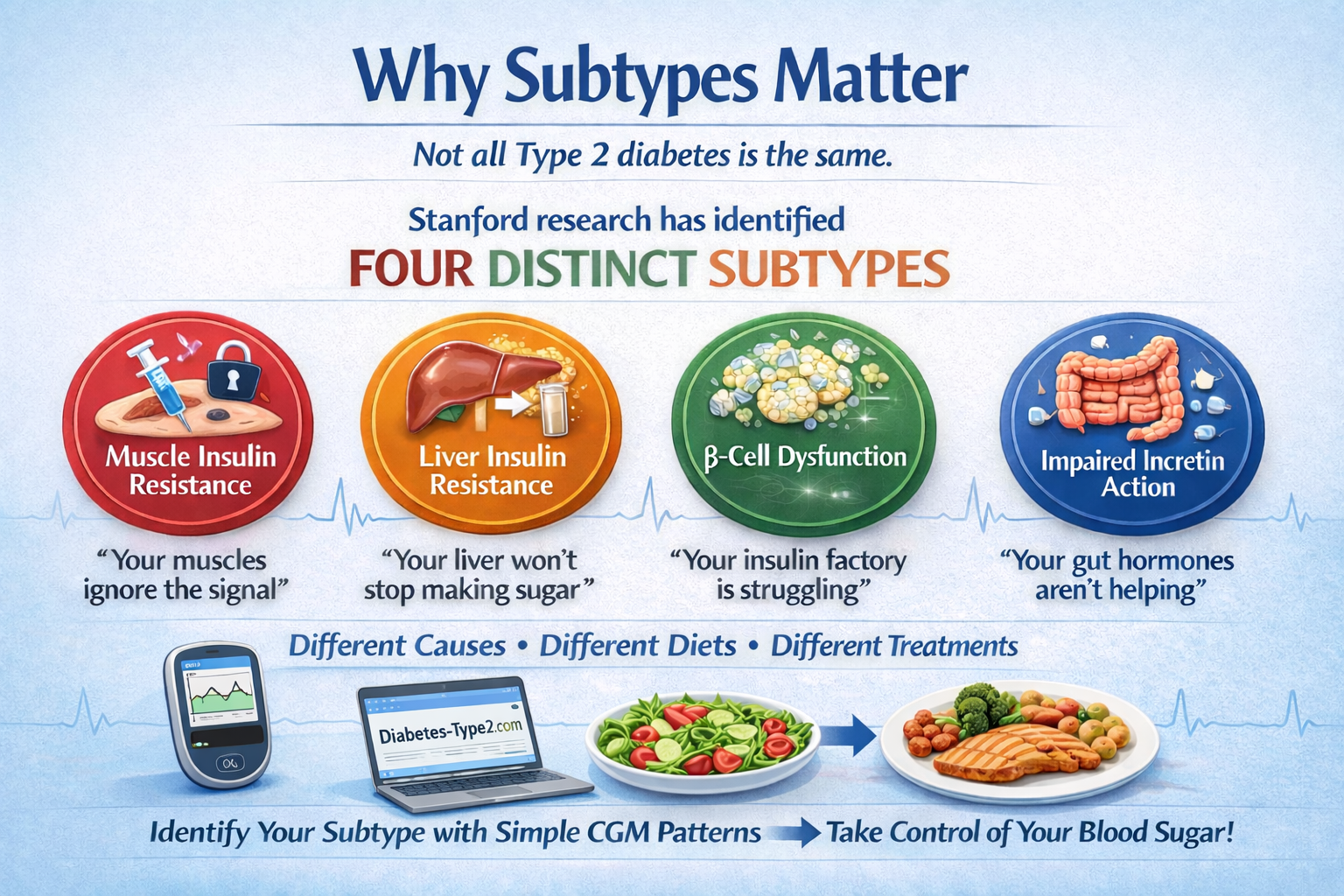
Recent Stanford research has identified Type 2 diabetes can be defined as four distinct subtypes:
| Subtype | Simple Explanation |
|---|---|
| 🔴 Liver IR | The liver continues releasing sugar into the blood even when the body does not need it, causing insulin resistance. |
| 🟠 Muscle IR | Muscles do not absorb sugar properly for energy, causing sugar to remain in the bloodstream and leading to insulin resistance. |
| 🟢 β-Cell Dysfunction | The pancreas does not produce enough insulin because the insulin-producing β-cells are damaged or reduced in number. |
| 🟣 Incretin Dysfunction | Hormones from the gut do not properly signal the pancreas to release insulin after eating, which affects blood sugar control. |
What Is Insulin Resistance (IR)?
Insulin resistance (IR) occurs when your body’s cells do not respond properly to insulin. Insulin is the hormone that helps move sugar (glucose) from your blood into your cells for energy. When cells resist insulin:
- Sugar stays in the bloodstream
- The body produces more insulin
- Blood sugar levels may rise over time
- Risk of Type 2 diabetes increases
Insulin resistance can lead to:
- High blood sugar
- Weight gain (especially around the waist)
- Heart disease risk
- Fatigue and low energy
Possible Warning Signs Some people may notice:
- Feeling tired after meals
- Sugar cravings
- Difficulty losing weight
- Increased belly fat
How It Is Detected Healthcare providers may use:
- Blood sugar tests
- HbA1c test
- Insulin level testing
- CGM (Continuous Glucose Monitor) patterns
Good News Insulin resistance can often improve with:
- Healthy nutrition
- Regular physical activity
- Good sleep habits
- Stress management
- Medication if prescribed
There for if you are diagnosed as diabetes type 2, finding what subtype is your diabetes it will help to improve to identify the best food for you.
Diabetes Subtypes – Key CGM Patterns
| Subtype | Key CGM Pattern |
|---|---|
| 🔴 Liver IR | Higher morning blood sugar, typically fasting glucose ≥110 mg/dL |
| 🟠 Muscle IR | Blood sugar stays elevated above 140 mg/dL for more than 3 hours after meals |
| 🟢 β-Cell Dysfunction | Rapid and high blood sugar spikes, often above 180 mg/dL within 45 minutes after eating |
| 🟣 Incretin Dysfunction | Blood sugar remains elevated longer than expected with irregular or unpredictable glucose patterns |
Each with different underlying causes and each responding best to different foods and treatments.
By identifying your specific diabetes subtype using simple CGM pattern analysis or our advanced assessment tools, you can select a diet tailored to your metabolic needs, address the underlying causes of glucose imbalance, and manage your blood sugar more effectively.
This website provides:
- A simple and structured method to help identify your diabetes subtype
- Professional CGM data analysis, where you submit your CGM data and receive a comprehensive, personalized report
- Targeted nutritional guidance, allowing you to review and select food choices that align with your identified subtype
Key Facts
Type 2 accounts for 90-95% of all diabetes cases Often develops after age 45, but increasingly seen in younger people Risk factors include obesity, physical inactivity, family history, and certain ethnicities Many people have prediabetes for years before developing Type 2
So, If you have diabetes type 2, identify your subtype then use our food selection to control it.